
10 Most Common Natural Stone Problems & Solutions
Expert answers to the most frequently asked questions about marble, granite, and natural stone care
- How do I remove stains from marble?
- Why does my marble have dull marks from lemon juice or wine?
- How often should I seal my stone countertops?
- How do I remove scratches from marble or granite?
- What causes white powder on my stone floor (efflorescence)?
- Can I put hot pans directly on granite?
- My marble turned yellow — how do I fix it?
- What is the best daily cleaner for natural stone?
- How do I repair a chipped stone countertop edge?
- Is granite really stain-proof? Does quartz need sealing?
A: Use the poultice method — a paste that draws the stain out of the stone pores.
- Mix a white absorbent powder (baking soda, diatomaceous earth, or cornstarch) with a cleaning agent to form a peanut-butter-like paste
- For oil-based stains (cooking oil, grease): use acetone or mineral spirits
- For organic stains (coffee, tea, wine): use 12% hydrogen peroxide + a few drops of ammonia
- Apply the paste 1/4 inch thick over the stain, cover with plastic wrap, tape the edges
- Let sit 24–48 hours, then remove and rinse
- Repeat if needed, then reseal the area
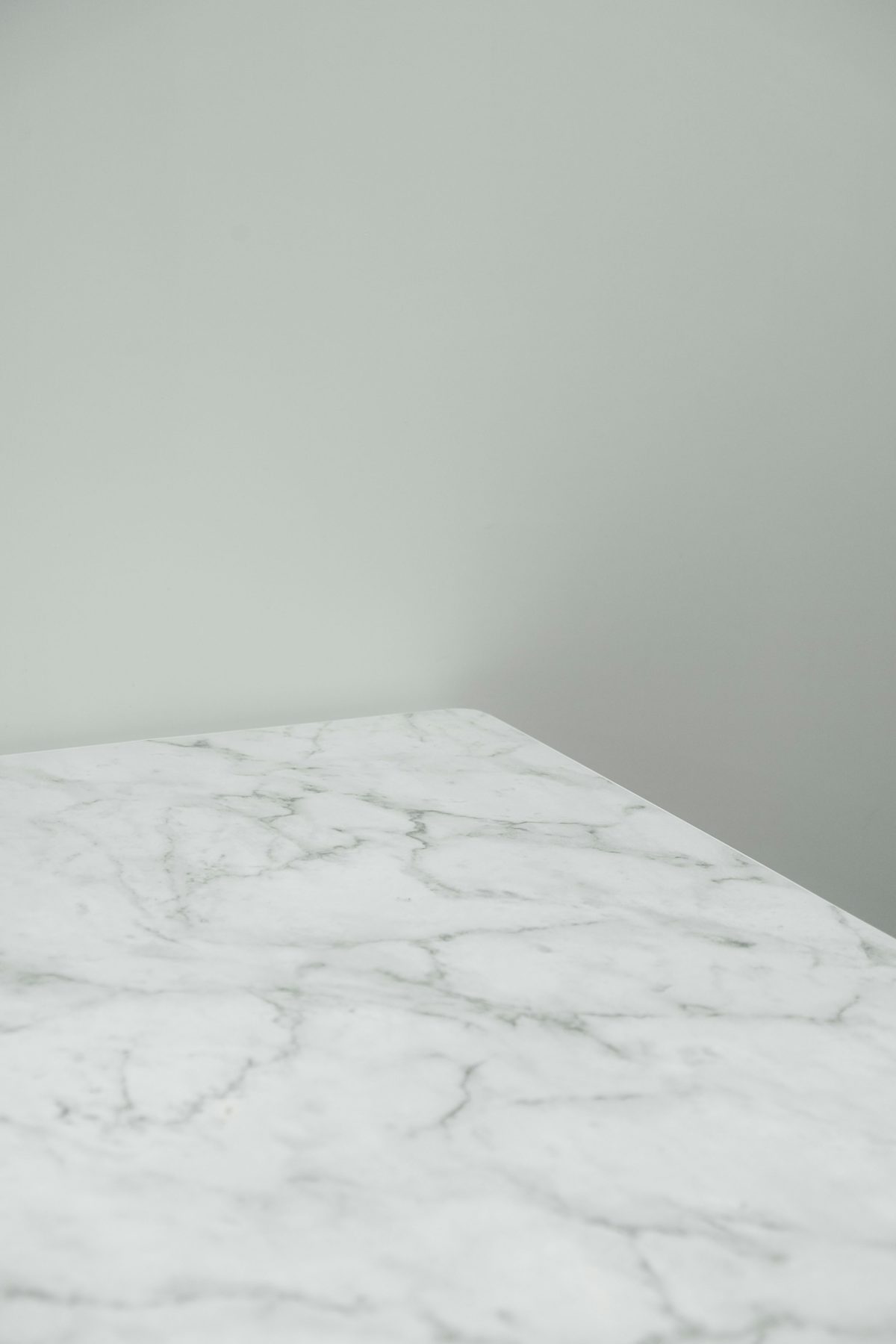
Marble’s natural beauty requires proper care to prevent stains and etching
A: That is etching (not staining) — acid has chemically eaten away the polished surface of the stone.
Marble, limestone, and travertine are calcium-based (calcareous) stones. Acidic substances like lemon juice, vinegar, wine, and tomato sauce react with the calcium carbonate, creating a dull, whitish mark.
How to fix light etching:
- Use a marble polishing powder (available at hardware stores)
- Dampen the area, sprinkle the powder, and buff with a soft cloth or low-speed buffer
- For deep etching, professional re-honing and re-polishing is required
A: It depends on the stone type:
| Stone Type | Sealing Frequency |
|---|---|
| Marble | Every 6–12 months |
| Granite | Every 1–2 years |
| Quartzite | Once a year |
| Limestone / Travertine | Every 6–8 months |
| Quartz (engineered) | Never — it is non-porous |
The Water Test: Sprinkle a few drops of water on the surface. If it beads up, the seal is good. If it absorbs and darkens the stone within 10–15 minutes, it is time to reseal.
A: The method depends on the scratch depth:
| Scratch Depth | Fix Method |
|---|---|
| Light surface scratches | Buff with a stone polishing compound or use 2000-grit wet sandpaper in a circular motion, then polish |
| Medium scratches | Use a stone repair kit with progressively finer diamond pads (200–3000 grit), then polish and seal |
| Deep scratches / gouges | Fill with color-matched epoxy or stone filler, let cure, sand flush, and re-polish |
A: That white, chalky residue is efflorescence (also called “new-bloom” or “saltpeter”) — mineral salts from the cement or substrate being carried to the surface by moisture.
How to fix it:
- Eliminate the moisture source — fix leaks, improve drainage, reduce humidity
- Let the area dry completely — this may take several days or weeks
- Clean the surface — vacuum the white powder, then wash with pH-neutral stone cleaner
- For stubborn deposits, use a efflorescence cleaner or dilute (stone-safe) cleaner
- Apply a penetrating sealer once the stone is fully dry

A: While granite is heat-resistant, it is not recommended for several reasons:
- Sudden temperature changes can cause thermal shock, leading to hairline cracks
- Heat can weaken or melt the epoxy at seams, causing the seam to separate
- Marble, limestone, and travertine are more heat-sensitive and can discolor or crack
A: Yellowing on marble has several possible causes:
| Cause | Solution |
|---|---|
| Iron oxidation (rust) | Use a marble-safe rust remover (poultice method) |
| Sealer yellowing with age | Strip the old sealer with a stone-safe sealer remover, then reapply fresh sealer |
| Wax or polish buildup | Strip with a stone-safe wax remover or ammonia-free cleaner |
| Moisture damage | Fix the moisture source, dry thoroughly, clean with hydrogen peroxide poultice |
| UV exposure (outdoor) | Some stones yellow naturally in sunlight; minimize with UV-protective treatments |
A: The safest daily cleaner for all natural stone is warm water with a few drops of mild, pH-neutral dish soap.
Best practices:
- Use a soft microfiber cloth or non-abrasive sponge
- Dry the surface with a clean towel to prevent water spots
- For a dedicated stone cleaner, look for products labeled “pH-neutral” and “stone-safe”
| Safe to Use | NEVER Use |
|---|---|
| pH-neutral stone cleaner | Vinegar or lemon juice |
| Mild dish soap + warm water | Bleach or ammonia |
| Isopropyl alcohol (diluted) | Windex or glass cleaners |
| Stone-specific disinfectant | Abrasive scouring powders |
| Soft cloth or sponge | Steel wool or scrubbing pads |

A: Small chips can be repaired with color-matched epoxy or acrylic stone filler:
- Clean the chipped area with isopropyl alcohol and let dry
- Mix epoxy filler with color pigments to match your stone
- Apply the filler slightly above the surface level
- Let it cure fully (follow manufacturer instructions)
- Sand flush using fine-grit wet sandpaper (800–2000 grit)
- Polish the repaired area with stone polishing compound
- Apply sealer over the repair
A:
Granite is NOT stain-proof. It is more stain-resistant than marble but remains porous. Even sealed granite will absorb liquids if spills are left for extended periods, especially oil-based substances.
Quartz (engineered stone) does NOT need sealing. Quartz is made of crushed stone bound with resin, making it non-porous. It is highly stain-resistant and never requires sealing. However:
- Quartz is less heat-resistant than natural stone — prolonged heat can damage the resin binder
- Quartz can still stain if harsh chemicals or dyes sit on the surface too long
- Quartz can be damaged by strong solvents (acetone, paint thinner)
| Property | Granite | Marble | Quartz |
|---|---|---|---|
| Needs sealing | Yes (1-2 years) | Yes (6-12 months) | No |
| Stain resistant | Medium | Low | High |
| Etch resistant | High | Low | High |
| Heat resistant | High | Medium | Low |
| Scratch resistant | High | Low | Medium |
Prevention Is Better Than Cure
– Wipe spills immediately
– Use coasters, trivets, and cutting boards
– Clean daily with pH-neutral soap and water
– Reseal according to schedule
– Avoid all acidic and abrasive cleaners
– Dust mop stone floors regularly to remove grit that causes scratches
10 Most Common Problems & Solutions — quick facts
Answer: 10 Most Common Problems & Solutions is available from JINGYU Luxury Stone (since 2003) as premium natural stone for kitchens, baths, feature walls, and custom projects. Primary topic: 10 most common problems & solutions natural stone slabs.
- Factory-direct selection with export packing for international shipments
- Typical inquiry details: thickness (often 2 cm / 3 cm), finish, and project city
- Contact: jingyustone@gmail.com · +86 139 0602 3221